






Cart 0


There’s been a quiet shift happening in interiors lately. Rooms are starting to feel a little richer, a little cozier, and more thoughtfully composed. The minimalistic rooms that have been trending for the past couple of years are giving way to cozy layered spaces filled with color and pattern. Personally, this is my preferred style, and I am loving this direction.
In our interior design work, we’re seeing window treatments play a much bigger role in creating that sense of depth and finish. As spaces move away from overly pared back minimalism, layering has re-entered the conversation not as a trend, but as a return to rooms that tell a story and feel lived in.
Window treatments are a big part of that story.
Layering in Interior Design Is About Feeling, Not Fuss
Layered spaces often get a bad reputation for being complicated or overdone. In reality, the most successful layered rooms feel calm and effortless. The goal isn’t excess, it’s balance.
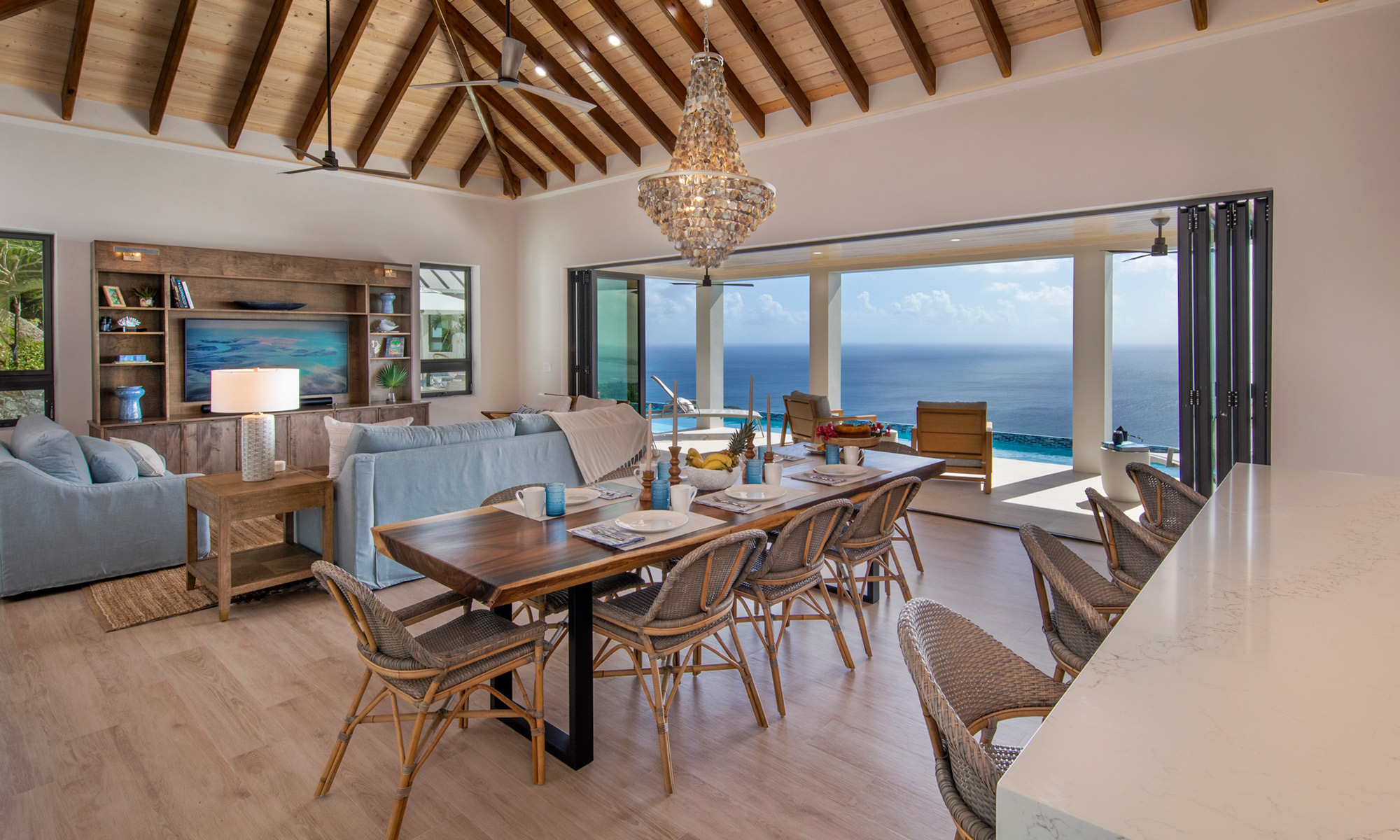
Soft materials help ground a space visually and emotionally. Fabric offsets the hard elements in the room. In the Caribbean, we generally have lots of big glass windows, concrete walls, and tile floors. Elements that bring softness to the room balance the look as well as the acoustics. Texture balances all these smooth surfaces as well. Window treatments do this quietly. They don’t compete with furnishings or finishes, but they anchor the room and often bring multiple elements together.
A room without window treatments can feel unfinished, even when everything else is technically “done.” It’s a subtle absence, but once you notice it, you can’t unsee it.
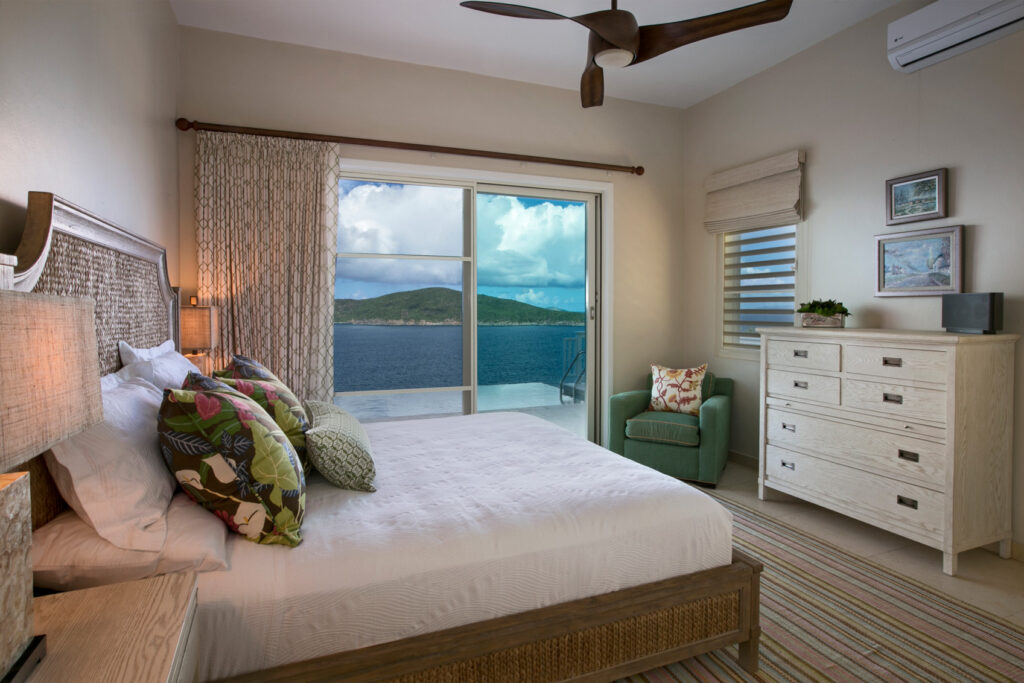
Where Pattern Belongs: Using Window Treatments to Add Pattern and Texture
Pattern has returned to interiors in a more nuanced way mixed with solids, paired with natural textures, and used thoughtfully rather than everywhere at once. One of the smartest places to introduce pattern is at the window.
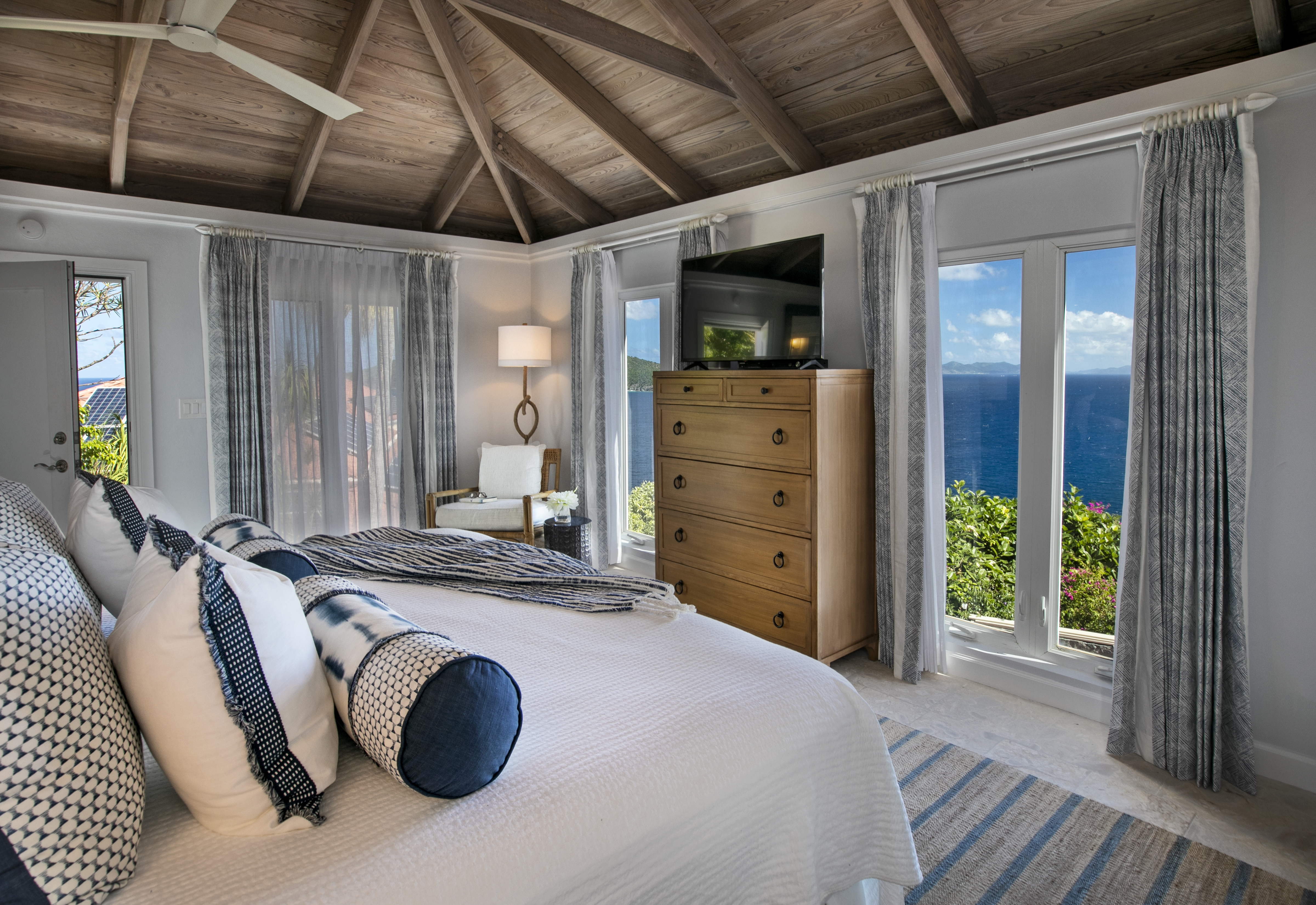
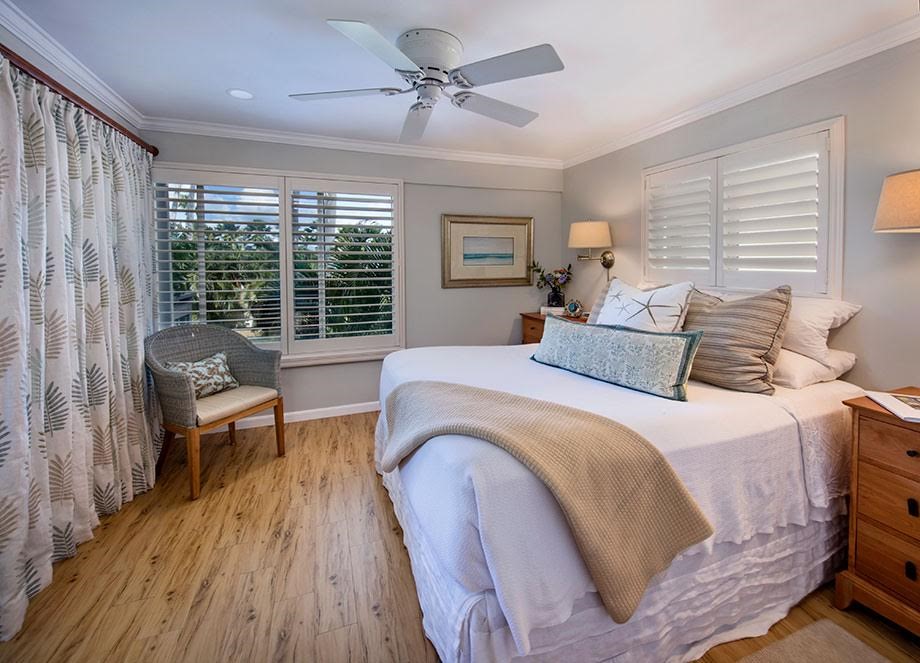
Patterned drapery can frame a view without overwhelming a room, especially when balanced with solid upholstery, woven shades, and natural materials like wood or stone. In layered rooms, pattern works best as a supporting element rather than the focal point.
When used this way, window treatments add rhythm and personality while allowing the architecture and furnishings to remain the stars.

Designing With Light, Not Against It
One of the most common misconceptions about window treatments is that they make spaces feel heavy or dark. In well-designed interiors, the opposite is true. Properly scaled and sized window treatments can actually make your room look taller and windows seem larger.
Sheer panels soften harsh sunlight. Lined drapery provides sun protection and makes mid day naps possible. Textured fabrics interact with light throughout the day, creating spaces that feel comfortable and lived-in rather than stark or glaring.
Thoughtful window treatments don’t block light—they help shape it. The result is a room that feels more adaptable, more inviting, and easier to live in.
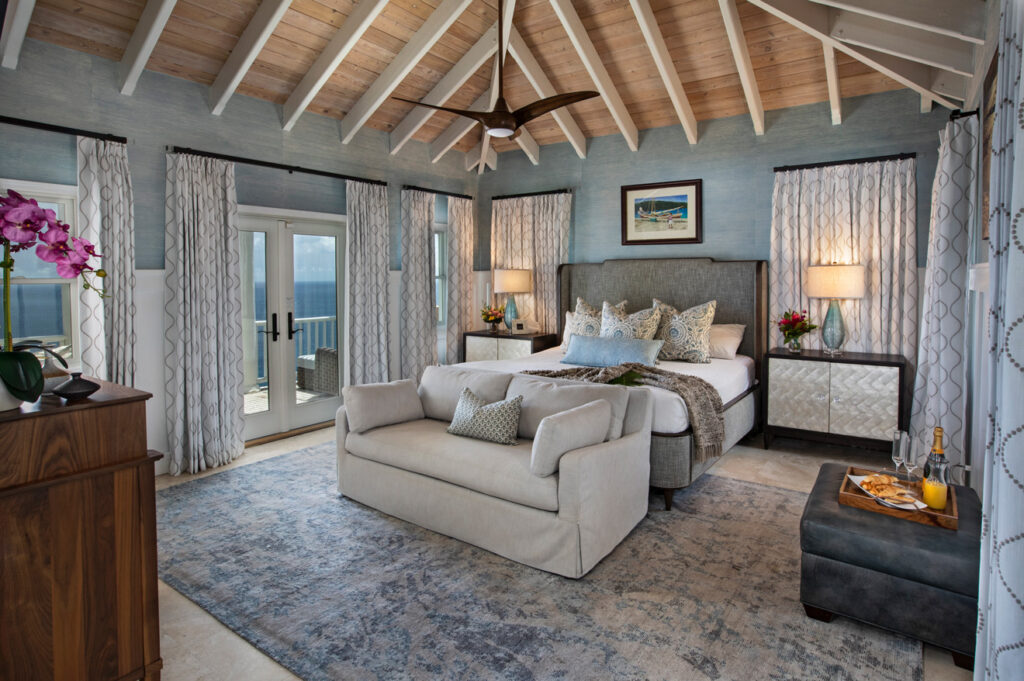
Comfort and Beauty Can Coexist
There’s a lingering idea that beautiful, well designed rooms prioritize comfort just as much as aesthetics.
Fabric plays a key role here. It absorbs sound, softens edges, and brings a sense of ease to a space. Window treatments contribute to how a room feels acoustically and emotionally, not just how it looks.
Comfort and beauty are not opposites. When layered thoughtfully, they reinforce each other.
What Window Treatments Really Add to a Room
Beyond privacy and light control, window treatments provide:
- Depth and dimension
- A sense of completion
- Visual rhythm and softness
- A connection between architecture and furnishings
They’re often the final layer that allows a room to feel settled rather than styled—considered rather than decorated.

A Final Thought
Layered spaces don’t shout. They unfold slowly and reveal their intention over time. Window treatments are part of that barefoot elegance that we infuse into our clients’ homes. They are an essential layer in any carefully thought out design.
At Lagnappe Interiors, we approach window treatments the same way we approach all interior design decisions: with restraint, intention, and a focus on how a home is meant to be lived in. When these details are considered early, they become part of the architecture of daily life—not just something added at the end.
Interested in exploring if adding window treatments to your space can bring comfort and beauty? Schedule a call to chat with us.